Bye-bye,
blisters!
How to get rid of them fast -
and keep walking!
Of course it’s fantastic to spend an entire day shopping or dancing the whole night through – but sometimes a painful blister can spoil all the fun. We tell you what you can do in order to keep on walking.
About
What exactly is a blister?
A blister is an area of raised skin with a watery liquid inside. Blisters form on hands and feet from rubbing and pressure. You can develop blisters on your feet from wearing uncomfortable or ill-fitting shoes for just a few hours.
med_foot_with_blister
Preferred spot for blisters: the heel
med_blister
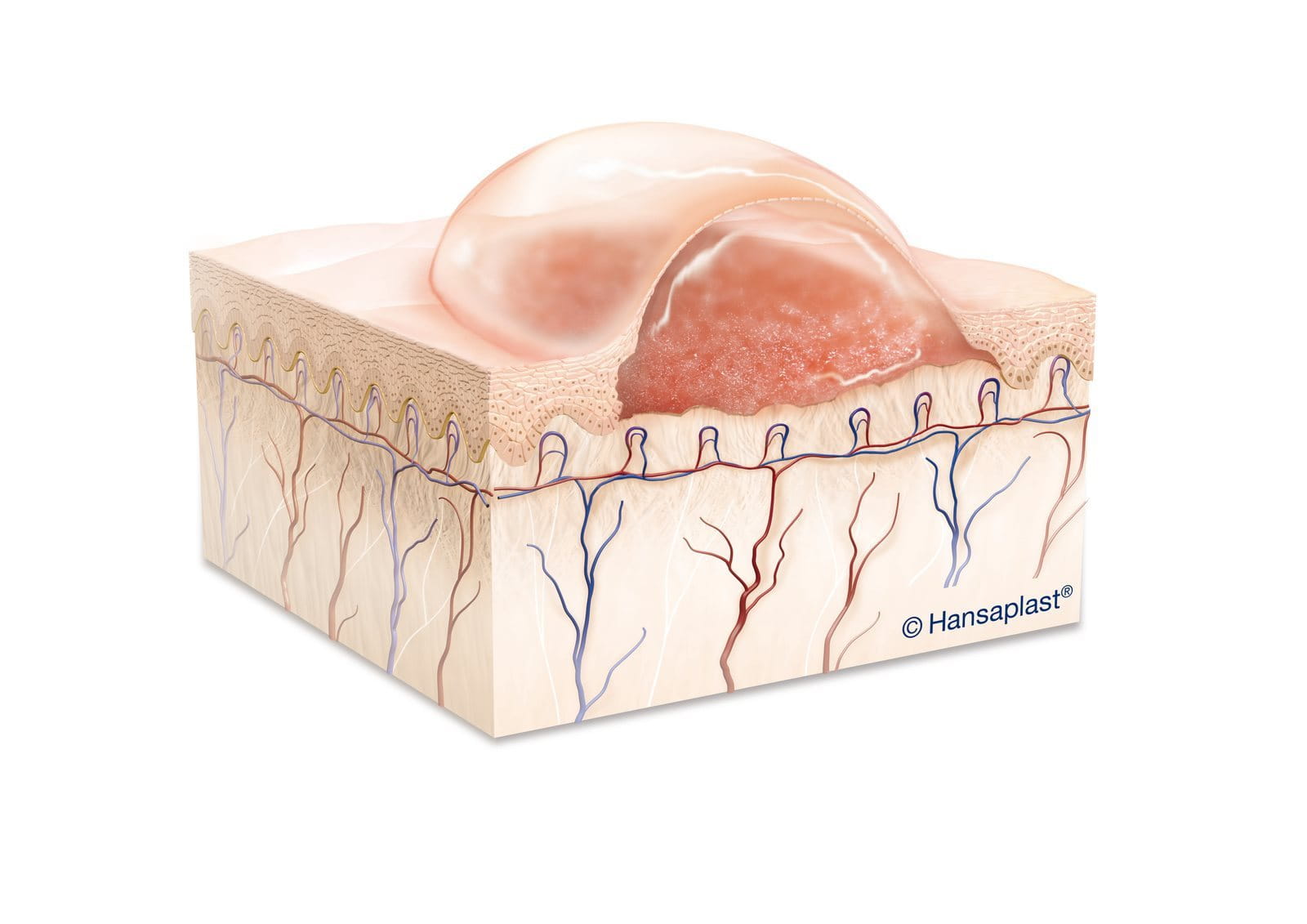
Blister with protective "blister roof" and tissue fluid

Continuous pressure or rubbing will eventually lead to the separation of the epidermis (the outer skin layer) from its lower skin layers, and a blister containing tissue fluid will form. This liquid is supposed to cushion the wound and protect it from further pressure. So actually, the blister is a clever self-protective measure of your body.

„An open blister
can easily
become infected.“

The blister’s outer membrane is what successfully protects the wound - from further pressure, or from dirt or bacteria entering. Unfortunately, a blister is painful and can burst if exposed to more pressure and friction, leaving an open wound that is extremely painful and can easily become infected.

Treatment
The best way to deal with a blister...
... is to leave it intact. Applying a blister plaster will help to get rid of a blister without puncturing it. The plaster will do three things:
  • help avoid additional pressure from shoes on to the blister,
  • protect the delicate protective layer of skin on top of the blister (the „blister roof“) until the blister is ready to drain by itself and
  • protect an open blister from infection and external influences such as water, dirt (and bacteria)
A blister requires patience, and there are a few measures you can take in order to prevent pain, and to ensure fast healing:

01

place_plaster
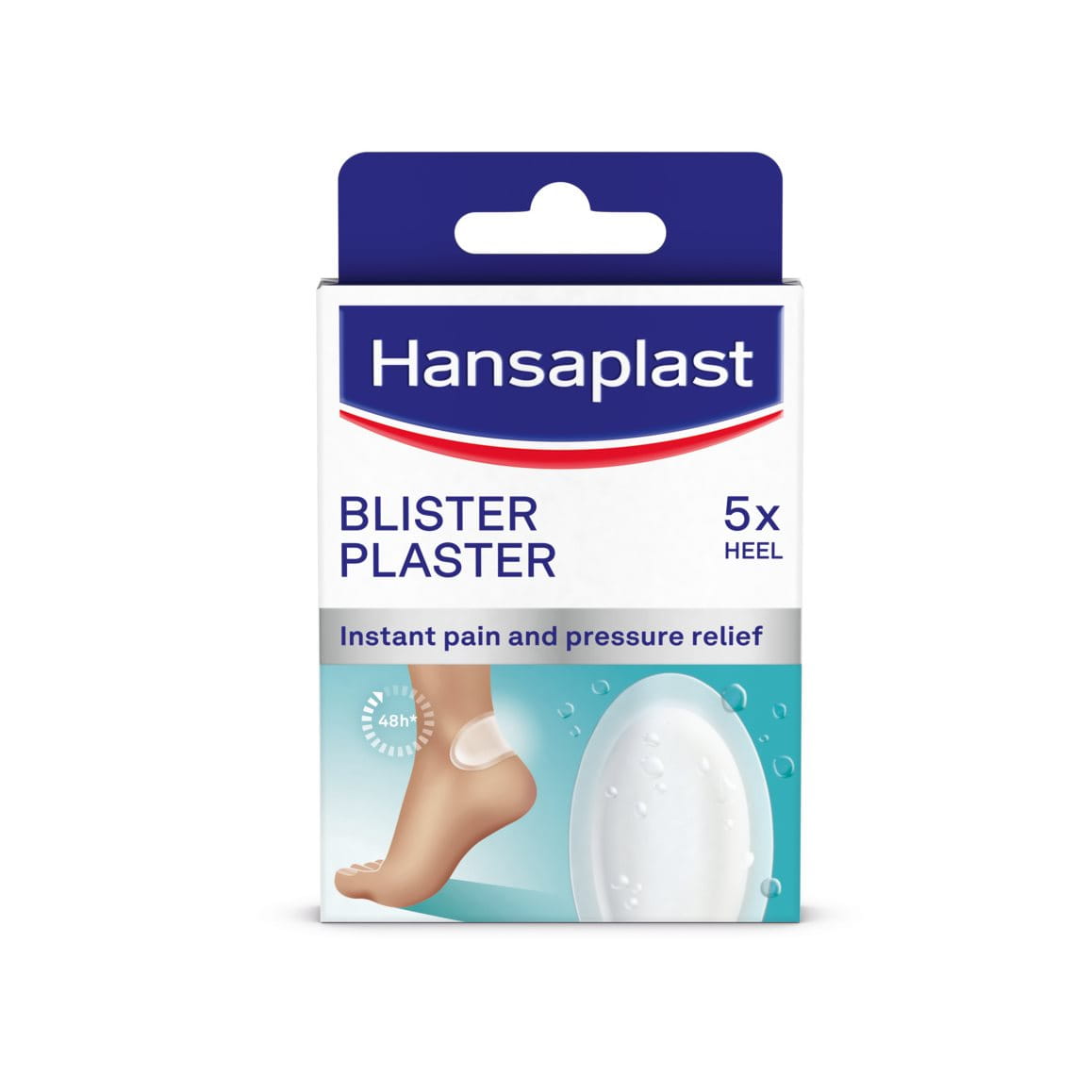
As soon as you can feel a blister developing, apply a plasterHansaplast SOS Blister Plaster or Pressure Stop are first self-help options. Both will cushion the affected area and protect even an open blister from infection and dirt. The plaster will also help take off the pressure-induced pain and accelerate the healing process.
Great for blisters that are not on heels or toes (SOS Blister Plaster covers both areas perfectly): Hansaplast Pressure Stop. It can be cut individually to fit the affected area and will cushion and take the pressure from it. Also, if the blister should accidentally open, either of these choices will protect your wound.
plaster_cut

02

03

plaster_wait_and_see
Wait and see: Don’t change the plaster unless it comes off by itself. Give the blister time to heal. All Hansaplast Blister Plasters with their hydrocolloid technology create an optimal moist wound healing environment that allows the wound to heal faster. In order to not disturb the healing process, leave the plaster in place for several days (only change it should it start to come off by itself).
No self-surgery, please! Don’t puncture the blister. If the blister comes open accidentally, don‘t pull off the outer skiny layer. Leave it alone to heal, and cover it with a blister plaster. As long as it is covered, the wound is protected from infection. A blister should not be opened because the blister roof protects against additional infection.
Expert Tip
expert
Dr. Maike Kuhlmann, Research & Development, Beiersdorf AG
plaster_moist_woundhealing
Moist woundhealing: optimum condition for healing

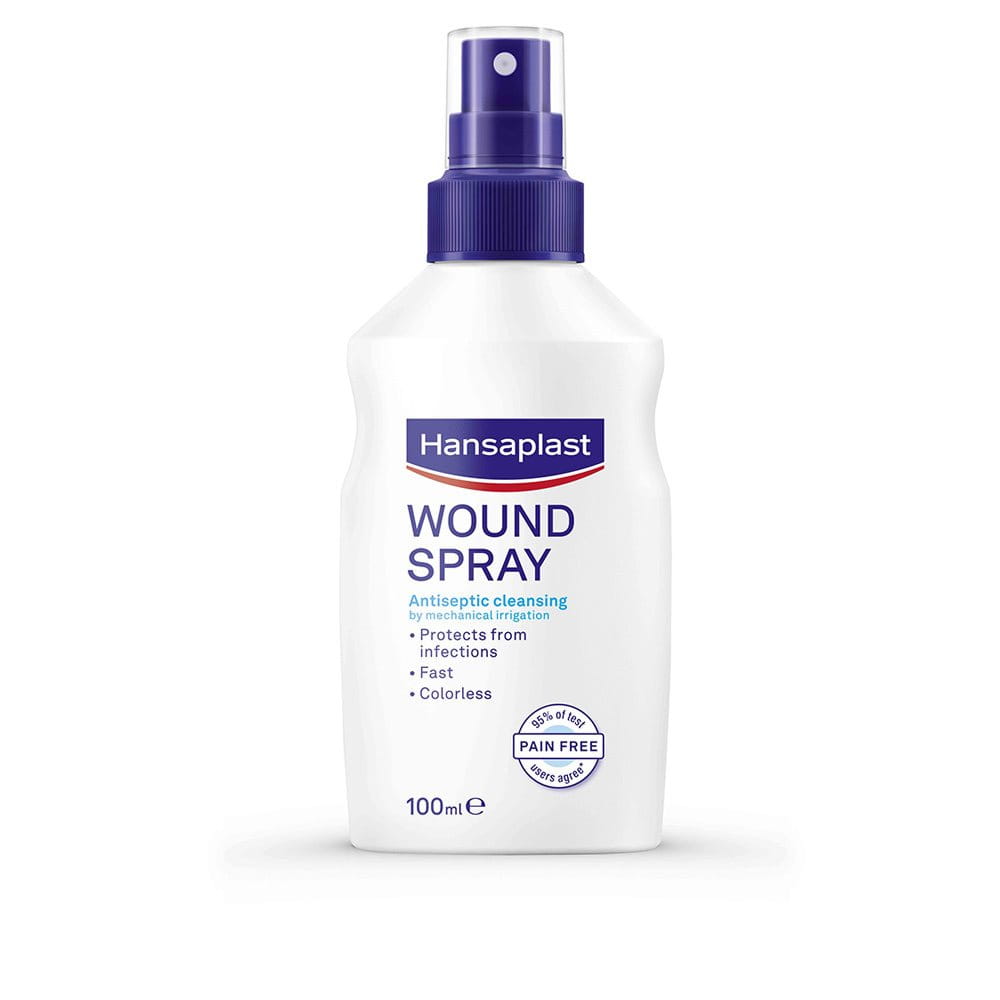
„Wounds heal best in a humid environment. This is a clinically proven learning that the plaster is based upon. In a protected environment the blister will heal off best and all by itself. WIth a blister, breaking its protective layer of skin allows bacteria to enter the wound, which is medically considered an open wound. Nevertheless, if this does happen, you should disinfect the punctured blister (for example with an antiseptic spray) and cover it with a blister plaster. It will protect the affected area from further pressure, friction and other harmful external influences.

„Our hydrocolloid
technology creates an optimum environment
for the wound to heal“

Thanks to our hydrocolloid technology the Hansaplast blister plasters create the optimum environment for the wound to heal. The hydrocolloid material of the plaster will at the same time take up superfluous liquid from the wound and create a protective gel cushion over it which will keep its environment humid and thus let the wound heal quickly.“

Solutions
You might want to try these products:
Smart products that will help you deal with blisters - from an invisible protective gel to plasters in different sizes.

Prevention
Tips to prevent a blister from forming

01

Apply a foot cream regularly such as Hansaplast Soft Feeling for basic foot care. This will lead to the skin on your feet becoming more supple and hydrated, therefore more resistent to developing blisters.
Hansaplast Pressure Stop with its soft hydrocolloid material cushions and protects feet from painful pressure in all kinds of shoes. The transparent material can be cut to any desired size and shape. Hansaplast Pressure Stop can also be applied to already chafed or broken skin.

02

03

Wear comfortable shoes that fit correctly. Especially if you know you will be walking a lot, dancing all night etc. – the right choice of shoe can help prevent future pain. Buy shoes later in the day as your feet will expand during the day. Break in new shoes before you take them on a grand shopping tour or sightseeing on a weekend trip.
Wearing new shoes or shoes without socks? Walking a lot? You can be clever and protect “hot spots” on your feet from blisters before you even leave the house: with Hansaplast Anti-Blister Gel or Hansaplast Pressure Stop.

04

05

Hansaplast Anti-Blister Gel smoothes the skin and reduces friction from shoes, thereby preventing blisters before they even occur. The invisible gel formulation can be used on any part of the foot that is prone to blisters, even in strappy sandals. It comes in a handy size, so you can always take it with you and be prepared!
Humidity and leather are not a good mix: Keep feet as dry as possible. Wet shoes, boots and socks will cause blisters far quicker than dry ones. Again, you can prevent potential “hot spots”, come rain or shine, with Hansaplast Pressure Stop or Hansaplast Anti-Blister Gel. Also you can prevent feet from sweating with Hansaplast Silver Active.

06

07

Working out or running? Wear special socks that are enforced on toes or heels and don‘t have seams.
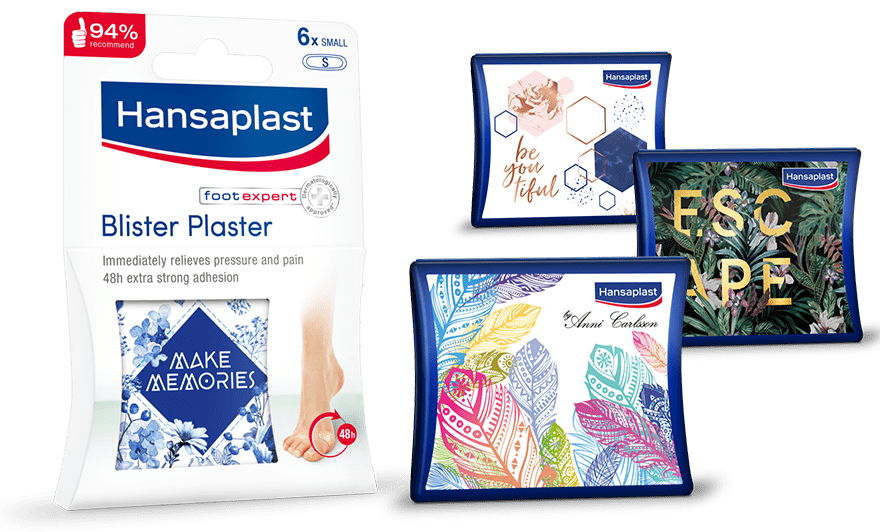
When going on city trips or for longer walks, be prepared by taking Hansaplast SOS Blister Plaster with you in your handbag.  The most convenient way is to take the new Hansaplast Pocket Pack which comes in two sizes, filled with either five large plasters for heels or six small ones for toes. Extra strong adhesion of the SOS Blister Plasters will protect and cushion your blister, let it heal – and make sure your feet stay safe from further friction – so that you can keep on walking!

08


For further information regarding Hansaplast products, please contact us via email on phc@beiersdorf.com. Please note that none of the above given tips or recommendations substitute medical advice. Carefully read the instructions for use given in our products‘ packages. Consult a health professional if our tips won‘t help or in case you have or suspect a medical condition.